Putting the Garden to Bed: An Essential Autumn Checklist for a Thriving Spring
Gia Kaye / Jolly Pond Living
As temperatures dip and morning frosts begin to paint the landscape, it's tempting to hang up your gardening gloves until spring. However, the work you do in late autumn lays the foundation for next year's blooms, harvests, and soil health.
Preparing your garden for winter isn't just about tidying up—it's about protecting root systems, preserving beneficial wildlife habitats, and building fertile soil.
1. Clear Debris Selectively (Don't Over-Clean)
While removing diseased plants (like blighted tomatoes or powdery mildew-covered squash) is critical to prevent pathogens from overwintering, avoid stripping every bed bare:
- Bag or burn diseased foliage—never add it to your cold compost pile.
- Leave sturdy perennials and seed heads (such as coneflowers, sunflowers, and ornamental grasses). They provide vital winter forage for birds and structural interest in a snowy landscape.
- Leave hollow stems standing or cut them to 8–12 inches to provide nesting sites for native solitary bees.
2. Feed and Insulate the Soil
Bare soil is vulnerable to erosion, nutrient runoff, and compaction from heavy winter snow and rain.
- Add compost: Spread a 1- to 2-inch layer of well-aged compost across vegetable and flower beds. Winter moisture and soil microbes will incorporate these nutrients naturally.
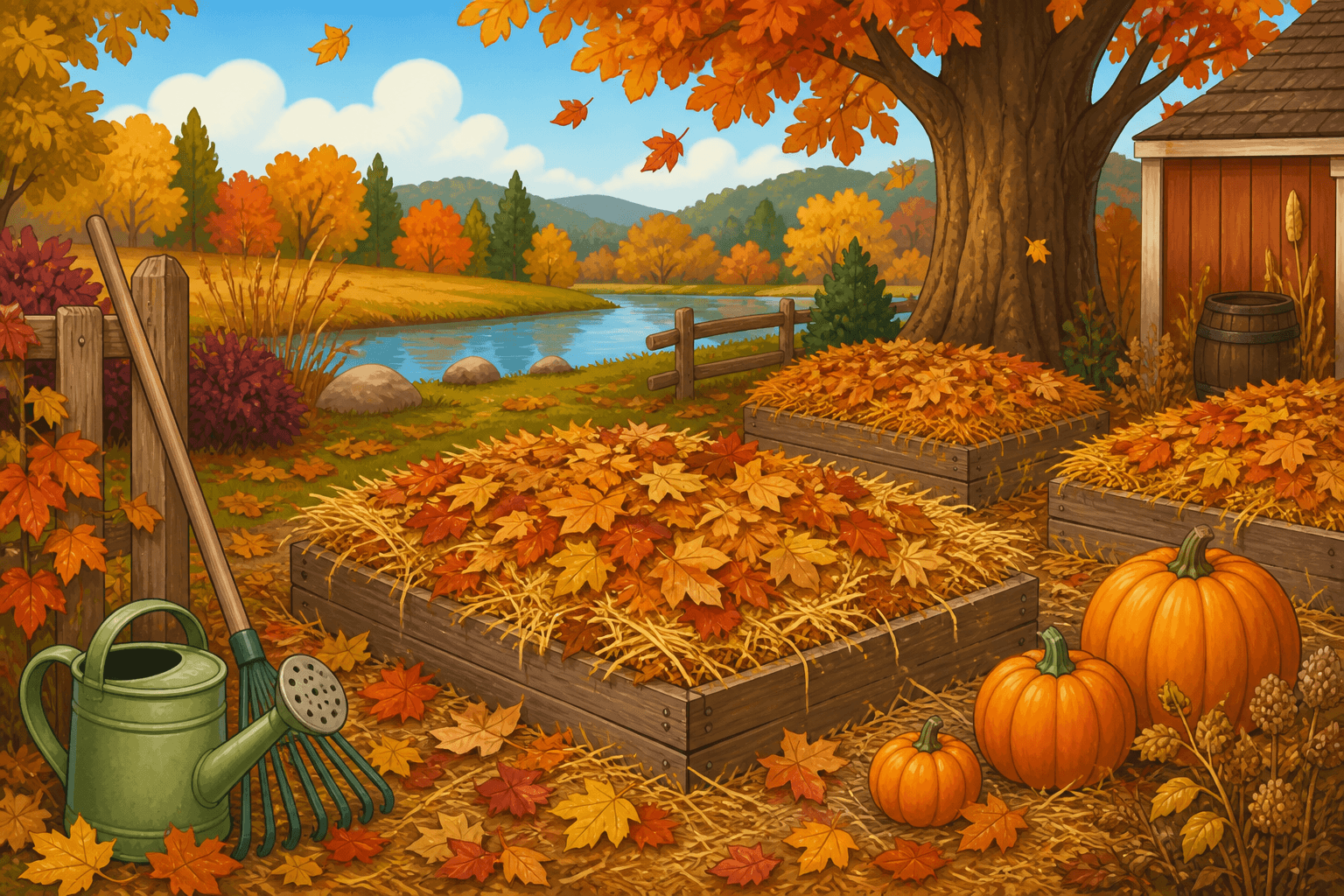
- Mulch heavily: Top beds with 3–4 inches of shredded leaves, clean straw, or wood chips. Mulch acts as a thermal blanket, reducing freeze-thaw cycles that can heave perennial roots out of the ground.
- Consider cover crops: If you have empty vegetable beds early in the fall, sowing cold-hardy cover crops like winter rye, hairy vetch, or crimson clover will suppress weeds and fix nitrogen.
3. Protect Perennials, Bulbs, and Shrubs
- Plant spring bulbs: Get your tulips, daffodils, and alliums into the ground before the soil freezes hard.
- Dig up tender bulbs: In colder zones, lift summer-blooming bulbs (dahlias, cannas, gladiolus, and caladiums) after the first light frost. Let them cure, brush off soil, and store them in peat moss or sawdust in a cool, dark, frost-free space.
- Hydrate evergreens: Broadleaf and coniferous evergreens continue to lose moisture through winter winds. Give them a deep, thorough watering before the ground freezes solid.
- Shield vulnerable shrubs: Wrap young shrubs or sensitive hydrangeas with burlap to prevent windburn and snow breakage.
4. Winterize Water Systems & Tools
Freezing water expands quickly, which can ruin irrigation lines, hoses, and ceramic containers.
- Garden Hoses: Drain completely, coil loosely, and store indoors out of freezing weather.
- Outdoor Spigots & Lines: Shut off interior valves, drain outdoor faucets, and install insulated covers.
- Containers & Pots: Empty terracotta and ceramic pots (which crack easily) and store upside down in a shed or garage.
- Hand Tools: Scrape off caked soil, sharpen blades, and wipe metal surfaces with mineral oil or linseed oil to prevent rust.
5. Take Notes for Next Year
Before the memory fades, sketch out where crops grew to plan your crop rotation for next season. Note which varieties excelled, which struggled with pests, and what empty gaps you'd like to fill when spring catalogs arrive.
Putting your garden to bed with care ensures that when the ground thaws, you'll return to rich, rested soil and plants primed for explosive growth.
More from the pond
- The Story of TinkerbellHigh school. Dad had just retired from the Navy, and we moved to a Midwestern state. I made friends with a girl who lived on a farm — and her cow, Tinkerbell.
- The quiet luxury of fresh sheets at Jolly Pond FarmThere is a distinct, sensory magic to sliding between fresh bed linens at the end of a long day on the homestead—a quiet luxury that feels entirely earned.
- Grow Your Own Fresh Food Anywhere: Introducing Tiny Spaces, Big HarvestsSome of the sweetest, most bountiful harvests I have ever brought to the dinner table didn’t come from a tilled half-acre field. They came from vertical felt wall pockets, five-gallon fabric grow bags, and cedar railing troughs perched right outside my kitchen door.